


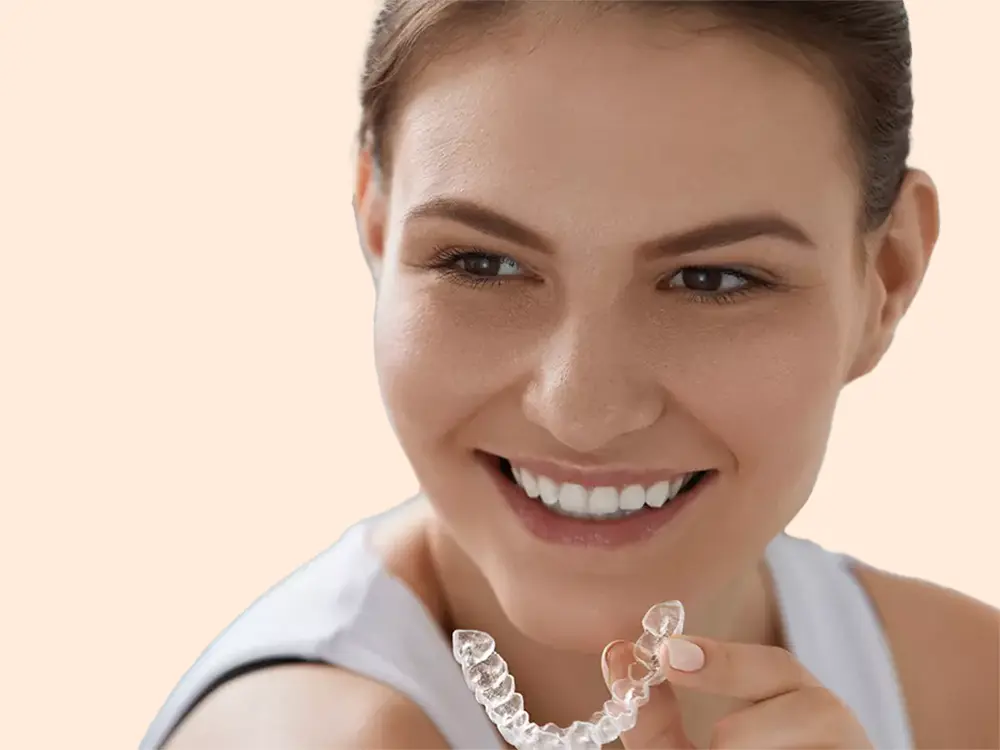
Choosing between Invisalign and traditional braces means evaluating more than which treatment can straighten your teeth. While both options can deliver excellent results, they differ significantly in appearance, daily maintenance, patient commitment and the types of orthodontic issues they treat most effectively.
For many clinically suitable and motivated patients, Invisalign may be the better choice. Its clear, removable aligners offer a discreet alternative to metal braces, allow you to remove them during meals and make brushing and flossing much easier.
However, Invisalign is not the best solution for every patient. Traditional braces often provide greater control for complex tooth movements and severe bite problems. In addition, Invisalign requires consistent wear, so successful treatment depends on following your orthodontist’s instructions and wearing the aligners as prescribed.
Instead of asking whether Invisalign is always better than braces, ask a more practical question:
Is Invisalign the right treatment for your smile, your lifestyle and your orthodontic needs?
A professional evaluation can provide the answer.
What Is Invisalign and How Does It Straighten Your Teeth?
Invisalign uses a series of custom-made, removable clear aligners to move your teeth gradually into their planned positions. Unlike traditional braces, it does not rely on brackets and wires.
Each aligner applies controlled pressure to specific teeth. As your treatment progresses, you move through a prescribed series of trays according to your provider’s instructions. The schedule varies by case, but patients typically wear each set for about one week and keep the aligners in place for at least 22 hours per day.
Some treatment plans also use small, tooth-colored attachments. Your provider bonds these attachments to selected teeth so the aligners can grip them more effectively and guide specific movements.
These attachments can:
- Improve the aligners’ grip on the teeth.
- Help produce more precise movements.
- Make the treatment slightly more noticeable.
- Support the planned orthodontic result.
The removable design makes eating and daily hygiene more convenient than with fixed braces. However, it also gives you more responsibility because the aligners can only move your teeth while you wear them.
You should also distinguish Invisalign from clear aligners as a general category. Invisalign is a specific brand, while clear-aligner therapy includes several systems. Research on clear aligners can help explain how this type of treatment works, but it does not prove that Invisalign performs better than every other aligner option.
Invisalign vs. Traditional Braces: Key Differences
Invisalign and traditional braces both use controlled forces to move your teeth. However, they deliver those forces in different ways. Invisalign uses removable clear aligners, while traditional braces use brackets and wires that remain attached to your teeth.
Appearance
Invisalign offers a more discreet appearance than traditional metal braces. The clear trays fit closely over your teeth, so they usually attract less attention during conversations, photographs and everyday activities.
However, Invisalign is not completely invisible. Your treatment may require tooth-colored attachments, and people may still notice the trays at close range. Even with these features, clear aligners generally remain less noticeable than metal brackets and wires.
Eating
Traditional braces stay attached while you eat, so your orthodontic provider may ask you to avoid hard, sticky or chewy foods that could damage the brackets or wires.
With Invisalign, you remove the aligners before meals and continue enjoying most of your usual foods. The American Association of Orthodontists recognizes this ability to maintain a normal diet as a practical advantage of removable aligners.
You still need to manage the trays responsibly. Store them safely during meals, clean your teeth whenever possible and put the aligners back in promptly. Leaving them out too often can prevent you from meeting your prescribed wear schedule and may slow your progress.
Oral Hygiene
Brackets and wires can make brushing and flossing more time-consuming. Food and plaque may collect around the appliance when patients do not clean these areas thoroughly.
Invisalign allows you to remove the trays and brush and floss without fixed hardware blocking access to your teeth. A 2025 meta-analysis reported lower levels of plaque, gum inflammation and bleeding among clear-aligner patients than among patients with fixed appliances.
However, clear aligners do not protect your teeth or gums automatically. You must clean the trays regularly and avoid placing them over unbrushed teeth, since doing so can trap food particles and sugars against the enamel.
Comfort
Both Invisalign and traditional braces can cause temporary pressure or soreness because both treatments move your teeth.
Clear aligners do not use protruding brackets or wires, so they may reduce certain types of irritation inside the mouth. A systematic review found that aligner patients reported less pain during some of the first days of treatment, although researchers did not observe the same difference consistently at later stages.
For this reason, Invisalign may feel less disruptive for some patients, but no orthodontic treatment can guarantee a pain-free experience.
Clinical Effectiveness
Both treatments can produce successful orthodontic outcomes. Clear aligners can be effective in selected mild-to-moderate cases, but the evidence does not support treating aligners and braces as equally predictable for every movement or diagnosis.
Traditional braces may offer stronger control over certain rotations, root positions, severe bite problems and extraction-based treatments. One systematic review of extraction cases found both approaches effective, but reported shorter treatment duration with fixed appliances and discrepancies between planned and achieved movements with aligners.
The appropriate appliance should therefore be selected according to the diagnosis rather than appearance alone.
Why Many Patients Prefer Invisalign
Invisalign’s appeal extends beyond aesthetics. For suitable patients, its practical advantages can make orthodontic treatment easier to integrate into work, school and social life.
| Benefit | Why Patients Prefer It |
|---|---|
| Discreet appearance | Clear aligners attract less attention than metal braces. |
| Fewer food restrictions | Patients remove the trays before eating. |
| Easier oral hygiene | Brushing and flossing remain more straightforward. |
| Daily flexibility | Patients can remove the aligners briefly when needed. |
| Potential comfort benefits | Aligners may cause less irritation for some patients. |
Research suggests that clear aligners may reduce some of the visible and disruptive aspects of fixed braces for selected patients. However, the evidence does not show that every patient will feel more comfortable throughout treatment.
The main advantage of Invisalign lies in how well it can fit into everyday routines. For patients who value discretion, flexibility and easier oral hygiene—and who can follow the prescribed wear schedule—it may offer a more convenient orthodontic experience.
At P&E Dental, patients can receive a personalized evaluation to determine whether Invisalign fits their clinical needs, lifestyle and treatment goals. This individualized approach helps ensure that convenience never comes at the expense of a predictable and healthy result.
Invisalign vs. Braces: Cost Comparison
There is no universal answer to which treatment costs more. Fees vary according to the complexity of the case, treatment length, clinician, location and services included.
The AAO recommends obtaining an individualized assessment because online price ranges cannot account for a patient’s specific treatment needs.
Invisalign may cost more than metal braces in some practices, but that is not a fixed rule. A relatively straightforward aligner case may cost less than complex braces treatment, while an extensive Invisalign plan involving additional refinements may cost more.
Patients should compare complete treatment proposals for the same diagnosis and ask whether the quoted fee includes:
- Diagnostic records and scans
- Routine follow-up visits
- Replacement aligners
- Refinement trays
- Emergency care
- Retainers after active treatment
- Financing charges or administrative fees
Insurance coverage also varies by plan, age, location and orthodontic benefit. Patients should confirm their individual coverage directly with the insurer and treating practice rather than assuming that Invisalign and braces will be reimbursed equally.
For patients who value discretion, removability and easier hygiene, Invisalign may justify a higher fee when it is clinically appropriate. Paying more, however, does not guarantee faster treatment or a better result.
Invisalign vs. Braces: Treatment Time
Treatment length depends on the complexity of the orthodontic problem, the movements required, missed appointments, appliance problems and—when aligners are used—patient adherence.
A 2024 systematic review concluded that there is low-certainty evidence suggesting similar treatment duration for clear aligners and fixed appliances in mild-to-moderate crowding cases. The included studies were inconsistent and primarily involved non-extraction treatment.
Some individual studies have reported shorter aligner treatment in selected mild-to-moderate non-extraction cases, while research on extraction cases has sometimes favored fixed appliances. These comparisons involve different patient groups and should not be generalized to every case.
Aligners may also require additional refinement trays when the achieved movements do not fully match the initial digital plan. Braces can likewise take longer when brackets break, appointments are missed or treatment does not progress as expected.
The more useful question is not which appliance is fastest in general, but which is most likely to achieve the required result predictably for the individual patient.

Is Invisalign the Right Orthodontic Treatment for You?
Invisalign may be a strong option when clinical suitability and lifestyle align.
You may be a good candidate when:
- Your orthodontic problem can be treated predictably with clear aligners
- You value a less noticeable appliance
- You are prepared to follow the prescribed wear schedule
- You want fewer food restrictions
- You prioritize easier access for brushing and flossing
Invisalign may be less appropriate when:
- The required tooth movements are particularly complex
- The orthodontist needs greater mechanical control
- Consistent wear is unlikely
- You frequently lose removable appliances
- Fixed braces are considered more predictable for the diagnosis
The appearance of your teeth alone cannot determine whether Invisalign is right for you. A complete evaluation may include photographs, digital scans, X-rays and a careful examination of your bite, roots, gums and jaw relationships.
For many motivated patients with suitable cases, Invisalign offers an effective, discreet and flexible alternative to traditional braces. However, some patients may achieve more predictable results with fixed braces, especially when treatment requires complex tooth movements or greater mechanical control.
At P&E Dental in Skokie, the dental team evaluates each patient’s smile, oral health and treatment goals before recommending an option. During your consultation, they can explain whether Invisalign fits your needs, what the treatment may involve and which alternatives could provide the best long-term result.
Frequently Asked Questions About Invisalign
How Does Invisalign Work to Straighten Teeth?
Invisalign uses a series of custom-made clear aligners to move your teeth gradually. Each set applies controlled pressure to specific teeth according to your personalized treatment plan.
As treatment progresses, you switch to a new set of aligners, usually every one to two weeks or as directed by your dentist. Each new tray guides your teeth closer to their planned positions.
Is Invisalign Right for Me?
Invisalign can treat many common orthodontic concerns, including crowded teeth, gaps, overbites and underbites. However, the appearance of your teeth alone cannot determine whether clear aligners are the best option for you.
At P&E Dental, Dr. Pinsky and Dr. Jesus evaluate your smile, bite and treatment goals before recommending Invisalign. They can explain whether clear aligners can produce a predictable result or whether another treatment may better suit your needs.
What Is the Difference Between Invisalign and Braces?
Traditional braces use metal brackets and wires that remain attached to your teeth. Invisalign uses clear, removable aligners that you take out before meals and while brushing or flossing.
Invisalign usually offers a more discreet and flexible experience. Braces may provide greater control for certain complex movements, severe bite problems or cases in which consistent aligner wear may become difficult.
Can I Get All My Dental Work Done at P&E Dental?
Yes. P&E Dental offers a broad range of preventive, cosmetic, restorative and emergency dental services in one office.
This allows the team to consider your overall oral health while planning Invisalign treatment. When necessary, they can address concerns such as cleanings, gum health, fillings or other dental needs before or during your clear-aligner journey.
