


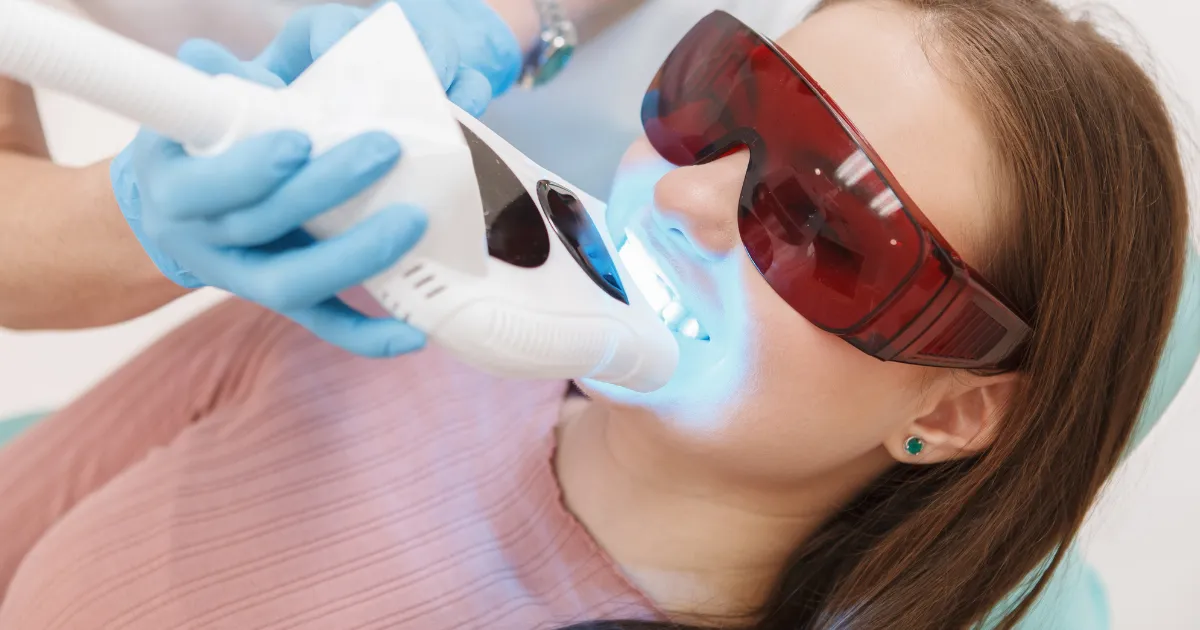
Yes, professional teeth whitening can noticeably brighten natural teeth for many patients. However, results vary depending on the cause of the discoloration, the condition of the teeth, existing restorations, lifestyle habits, and the whitening method used.
Unlike whitening toothpaste, which mainly helps remove surface stains, professional whitening uses peroxide-based agents to change the appearance of discoloration within the tooth. A dentist can also evaluate whether whitening is appropriate and explain what results and side effects may be expected.
Professional whitening is not permanent, and it does not lighten crowns, veneers, or tooth-colored fillings. The key question is therefore not only whether teeth whitening works, but whether it is likely to work well for your specific type of discoloration.
How Does Professional Teeth Whitening Work?
Professional teeth whitening uses peroxide-based agents to break down compounds that make teeth appear darker or more yellow. These agents interact with discoloration within the tooth, helping natural teeth look lighter.
This is different from a professional cleaning or whitening toothpaste. A cleaning removes plaque, tartar, and some external stains, while whitening toothpaste mainly polishes the surface. Professional whitening is intended to change the appearance of the tooth’s underlying color.
Treatment may take place in a dental office or through a dentist-supervised take-home system.
At P&E Dental, every whitening treatment begins with a personalized evaluation. Before recommending a whitening option, our dental team examines your teeth and gums, reviews any existing crowns, veneers, or fillings, and identifies factors that could affect your comfort or results.
What Results Can You Expect?
Professional teeth whitening can produce a visible change in the color of natural teeth, but the degree of improvement differs from person to person.
The final result may be influenced by:
- the starting shade;
- the cause and depth of the discoloration;
- the treatment method;
- the presence of restorations;
- the way the teeth respond to whitening.
Some patients see a dramatic difference, while others notice a more subtle improvement. A successful result does not always mean achieving the lightest possible shade. It may simply mean creating a brighter, more even-looking smile.
Shade guides can help document progress, but they cannot guarantee that every patient will lighten by a specific number of shades. A dental consultation is the best way to establish realistic expectations before treatment.
Which Types of Stains Respond Best?
Professional teeth whitening tends to work best when discoloration affects natural tooth structure and can respond to peroxide-based whitening agents. However, not all stains have the same cause.
Surface and Lifestyle Stains
Stains associated with coffee, tea, red wine, tobacco, and strongly pigmented foods or drinks may respond well to whitening.
A professional cleaning may remove some external buildup before treatment, but cleaning and whitening serve different purposes. Whitening is intended to lighten the underlying tooth color after surface deposits have been addressed.
Deeper or Intrinsic Discoloration
Some discoloration develops within the tooth. It may be related to aging, medication exposure, dental development, trauma, or previous treatment.
These cases may still improve, but the result can be slower, less uniform, or less predictable. A dentist may recommend a different whitening protocol or another cosmetic option when conventional whitening is unlikely to provide the desired result.
A Single Dark Tooth
One tooth that is noticeably darker than the surrounding teeth should be evaluated before whitening.
A change in the color of a single tooth may be associated with trauma, changes inside the tooth, or previous root canal treatment. General whitening may not correct the problem if the cause has not been identified.
The most important step is therefore understanding why the tooth or teeth have changed color, rather than simply choosing the strongest available product.
What Professional Teeth Whitening Cannot Change
Professional whitening improves color only. It cannot correct every cosmetic concern.
Crowns, Veneers, and Fillings
Whitening agents do not lighten crowns, veneers, bridges, implants, or tooth-colored fillings in the same way they lighten natural teeth.
These restorations generally retain their existing shade while the surrounding teeth become brighter. This may create a visible mismatch, especially near the front of the mouth.
A dentist can assess the position and color of existing restorations before treatment and explain whether any adjustment might need to be considered afterward.
Tooth Shape, Position, and Damage
Whitening does not change the shape, size, alignment, or position of the teeth. It also cannot close gaps or repair chips, cracks, or worn edges.
In some cases, a tooth may appear darker because of thinning enamel, surface texture, structural damage, or its position in the mouth. Whitening alone may not correct those concerns.
Depending on the cause, a dentist may discuss alternatives such as bonding, veneers, crowns, or treatment designed for an individual darkened tooth.
Professional vs. Over-the-Counter Teeth Whitening
Both professional and over-the-counter whitening products can improve tooth color, but they differ in evaluation, personalization, supervision, and treatment planning.
Before professional whitening, a dentist may examine your teeth, identify the cause of discoloration, review existing restorations, and check for oral health concerns that could affect comfort or results.
Manufacturers design over-the-counter products, including strips, gels, trays, pens, and whitening toothpastes, for general use. These products may improve certain types of discoloration, but they do not provide an individualized dental assessment.
A dental professional can also monitor sensitivity and address uneven results during treatment. However, patients should not view professional whitening as simply “stronger” or automatically better. The most appropriate method depends on the patient’s oral health, type of discoloration, sensitivity, and goals.
| Factor | Dentist-Supervised Whitening | Over-the-Counter Whitening |
|---|---|---|
| Dental assessment | May include an examination and review of restorations | Not included |
| Treatment selection | Can be adapted to the patient | Standardized for general use |
| Supervision | Performed or monitored by a dental professional | Self-administered |
| Sensitivity concerns | Can be discussed and monitored | Managed by the user |
| Common formats | In-office care or dentist-provided take-home systems | Strips, trays, gels, pens, and toothpastes |
If you have significant discoloration, visible restorations, sensitivity, or uncertainty about the cause of staining, a consultation at P&E Dental can help determine which whitening option may be appropriate for your smile.
Is Professional Teeth Whitening Safe?
Professional teeth whitening is generally considered safe when appropriate products are used as directed and treatment is performed or supervised by a dental professional. However, temporary side effects can occur.
Tooth Sensitivity
Sensitivity is one of the most common side effects. Some patients notice discomfort when consuming hot, cold, sweet, or acidic foods and drinks during or after treatment.
The intensity may depend on the method, concentration, exposure time, and the patient’s existing sensitivity. A dentist may adjust the treatment plan when sensitivity is a concern.
Gum Irritation
Whitening gel can irritate the gums or other soft tissues if it comes into contact with them. Proper application and following professional instructions can help reduce this risk.
Patients should contact the dental office if they experience significant pain, persistent irritation, or sensitivity that does not improve as expected.
Why an Oral Exam Matters
A dental evaluation can identify cavities, cracked teeth, exposed roots, gum recession, or active gum disease that may affect comfort or make whitening inappropriate as a first step.
An examination can also determine whether the discoloration is likely to respond to conventional whitening or requires another type of care.
How Long Do Professional Whitening Results Last?
Professional whitening results are not permanent. How long the improvement remains noticeable depends on lifestyle, oral hygiene, natural aging, the original discoloration, and maintenance after treatment.
Coffee, tea, red wine, tobacco, and strongly pigmented foods or drinks may contribute to new staining over time.
Good oral hygiene and routine professional care can help reduce surface buildup. Some patients may also consider touch-up treatments, but the timing should be based on professional guidance rather than a universal schedule.
Repeating whitening too frequently or using products incorrectly may increase sensitivity or irritation. Whitening is therefore best viewed as a cosmetic treatment that may require maintenance.
Who Is a Good Candidate for Professional Teeth Whitening?
Professional teeth whitening may be appropriate for adults with natural teeth they want to brighten, oral health that allows treatment to be considered, and realistic expectations about the outcome.
It may be worth discussing with a dentist when you:
- want to reduce yellow or stain-related discoloration;
- understand that results vary;
- know that restorations will not whiten like natural teeth;
- are willing to follow treatment and maintenance instructions;
- want professional guidance in choosing a method.
Whitening may not be the appropriate first step when there are untreated cavities, active gum disease, significant sensitivity, or discoloration unlikely to respond to conventional treatment.
A dental evaluation is necessary to determine whether whitening is suitable for an individual patient.

In-Office or Take-Home Whitening: Which Is Better?
Both in-office and dentist-supervised take-home whitening can improve the color of natural teeth. Neither option is automatically better for everyone.
In-Office Whitening
In-office whitening is performed by a dental professional and may appeal to patients who want a faster, closely monitored treatment.
The dental team can take steps to protect the gums, apply the whitening agent, and observe the patient during the appointment. Temporary sensitivity may still occur, and faster treatment does not guarantee a better final result.
Dentist-Supervised Take-Home Whitening
Take-home whitening uses a system provided and monitored by a dental practice. Depending on the treatment, it may include customized trays.
This option usually produces gradual changes and requires the patient to follow instructions consistently. It may offer greater flexibility for people who prefer to whiten at home.
Choosing the Right Option
A dentist may consider:
- the desired timeline;
- previous tooth sensitivity;
- the type of discoloration;
- the ability to follow a home routine;
- existing crowns, veneers, or fillings;
- maintenance preferences.
The most appropriate plan balances effectiveness, comfort, convenience, oral health, and realistic expectations.
P&E Dental offers professional whitening options in Skokie, including in-office treatment and customized take-home solutions.
Questions to Ask Before Whitening Your Teeth
Before treatment, consider asking your dentist:
- What Is Causing My Tooth Discoloration?
Identifying the cause helps determine whether whitening is likely to work.
- Am I a Good Candidate?
A dental examination can reveal cavities, gum disease, sensitivity, restorations, or other concerns that may affect treatment.
- Which Whitening Option Is Best for Me?
The dentist can explain whether an in-office or supervised take-home approach is more appropriate.
- How Can I Maintain My Results?
Discuss habits, oral hygiene, and whether future touch-ups may be appropriate.
These questions can help you make an informed decision and avoid unrealistic expectations.
So, Does Professional Teeth Whitening Work?
Yes, professional teeth whitening works for many patients and can noticeably improve the color of natural teeth.
Its effectiveness depends on the cause of the discoloration, the condition of the teeth, existing restorations, the selected method, and the patient’s expectations and habits.
Professional supervision can help identify the source of staining, select an appropriate approach, monitor sensitivity, and explain the limits of treatment. It does not guarantee a specific shade or permanent results, but it makes the process more personalized and clinically informed.
At P&E Dental, we offer professional teeth whitening in Skokie, including in-office treatment and customized take-home options. Call us today at (847) 261 8241 to schedule a cosmetic consultation and find out which whitening approach may be right for your smile.
